VISION for Kids Got Rights
Through a portable Truth Booth, children speak in their own words about the rights shaping their lives; their testimony drives a hybrid documentary, stop-motion fables, and short, teacher-ready vertical films that carry the human rights conversation from communities into classrooms.
THE FILM
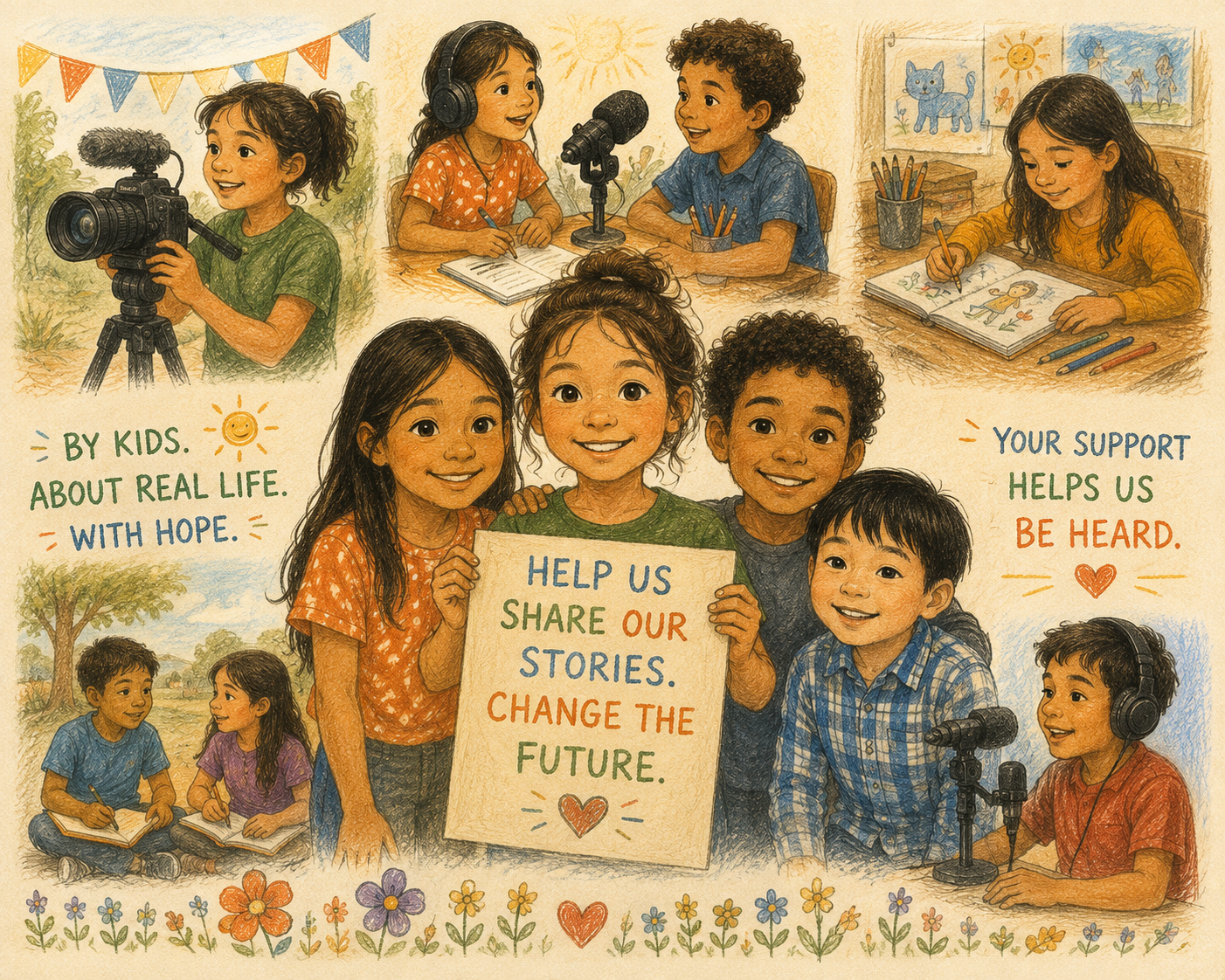
NOBODY ASKS CHILDREN ABOUT THEIR RIGHTS. WE ASKED THEM ABOUT THEIR LIVES INSTEAD.
WHAT WE ASK
A child sits down in the Truth Booth. The interviewer does not explain human rights, does not define anything, and mostly does not talk. The prompts are these:
Tell me about a time you felt really brave.
Tell me about a time someone surprised you.
Tell me about a time something wasn't fair.
Tell me about someone who made you feel safe.
Tell me about a time you wished an adult had listened.
Tell me about something you wish grown-ups understood.
Tell me about a time you helped someone.
Tell me about a secret you can tell now.
Tell me about your favorite day.
Tell me about a day you'll never forget.
Not one of them mentions rights. Nearly every answer is about them.
That is the design. Ask a nine-year-old what she thinks about equality and you will get what she has been taught to say. Ask her about a time something wasn't fair and she will tell you what happened, in order, with the details that stayed with her. The second answer is the one worth animating.
WHAT EMERGES
The themes are not a questionnaire. They are what appears once you have watched hundreds of interviews and begun sorting stories into families.
Home
Housing, moving, sharing space, a place of your own.
Safety
Physical safety, emotional safety, bullying, violence, fear
Dignity
Respect, kindness, being ignored, feeling valued
Equality
Inclusion, fairness, bias, belonging
Agency
Making choices, speaking up, being listened to, taking action
Hope
Dreams, helping others, imagining the future, finding courage
Five original stop-motion fables, one for each family, built from what the children actually said.
ON HOPE
Hope was not planned. It surfaced on its own, in interview after interview, and it is the one category with no matching article in the Declaration — there is no right to hope.
Which is why it belongs at the end. The first five describe what children are owed. The sixth is what they do anyway, and it is the only honest place for the film to finish.
Driven by curiosity and built on purpose, this is where bold thinking meets thoughtful execution. Let’s create something meaningful together.
WHY THE UNIVERSAL DECLARATION
There is a separate treaty for the rights of children. We went to the original instead.
The Universal Declaration of Human Rights says that all human beings are born free and equal in dignity and rights. Born — not eventually, not on turning eighteen. Children do not need a smaller document written specially for them. They need to be told that the one covering everyone else already covers them.
We never say that to them in the booth. We just ask about the day they were brave, and let the Declaration turn out to have been describing their life all along.
THE TRUTH BOOTH DESCRIPTION
WHAT IT IS
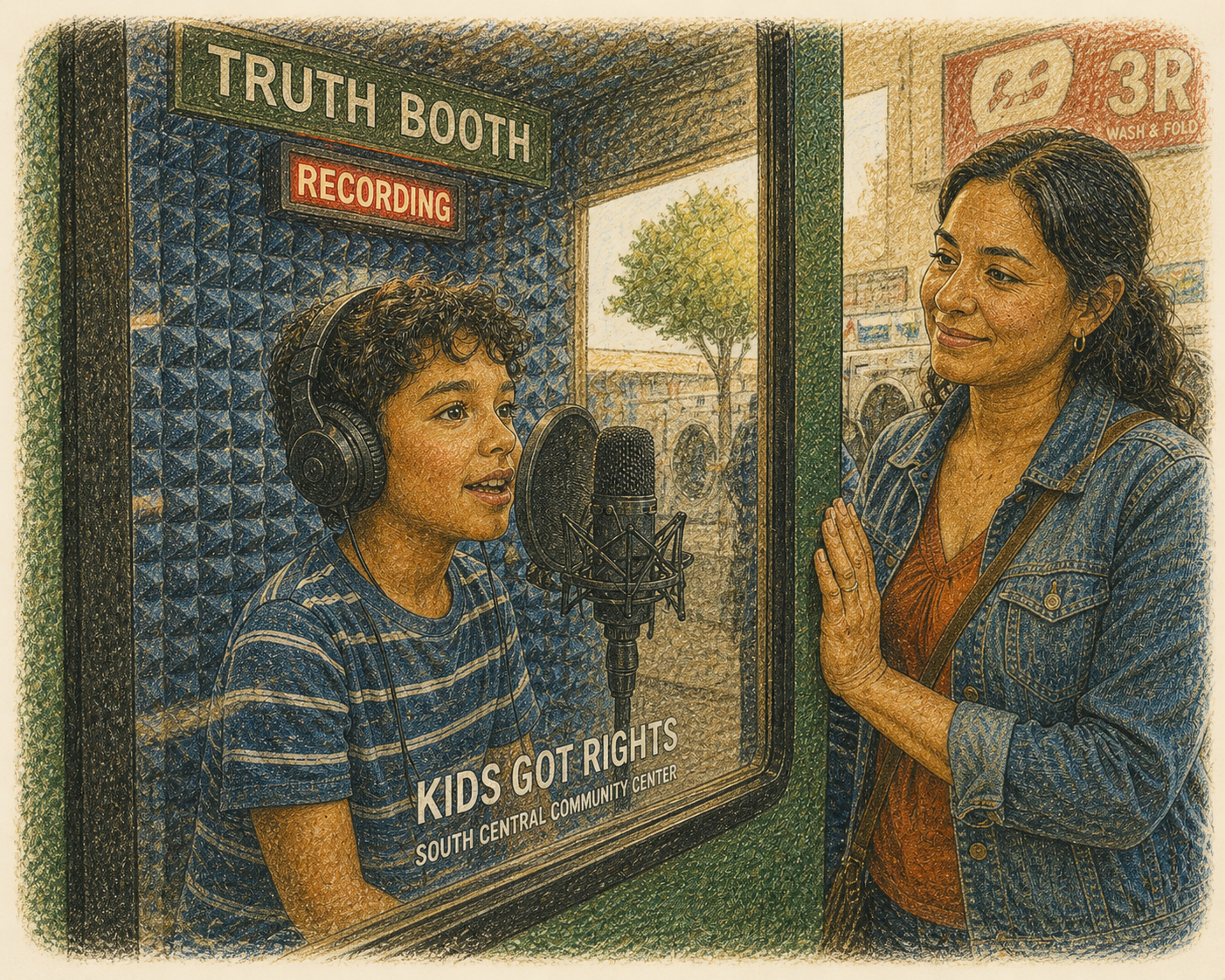
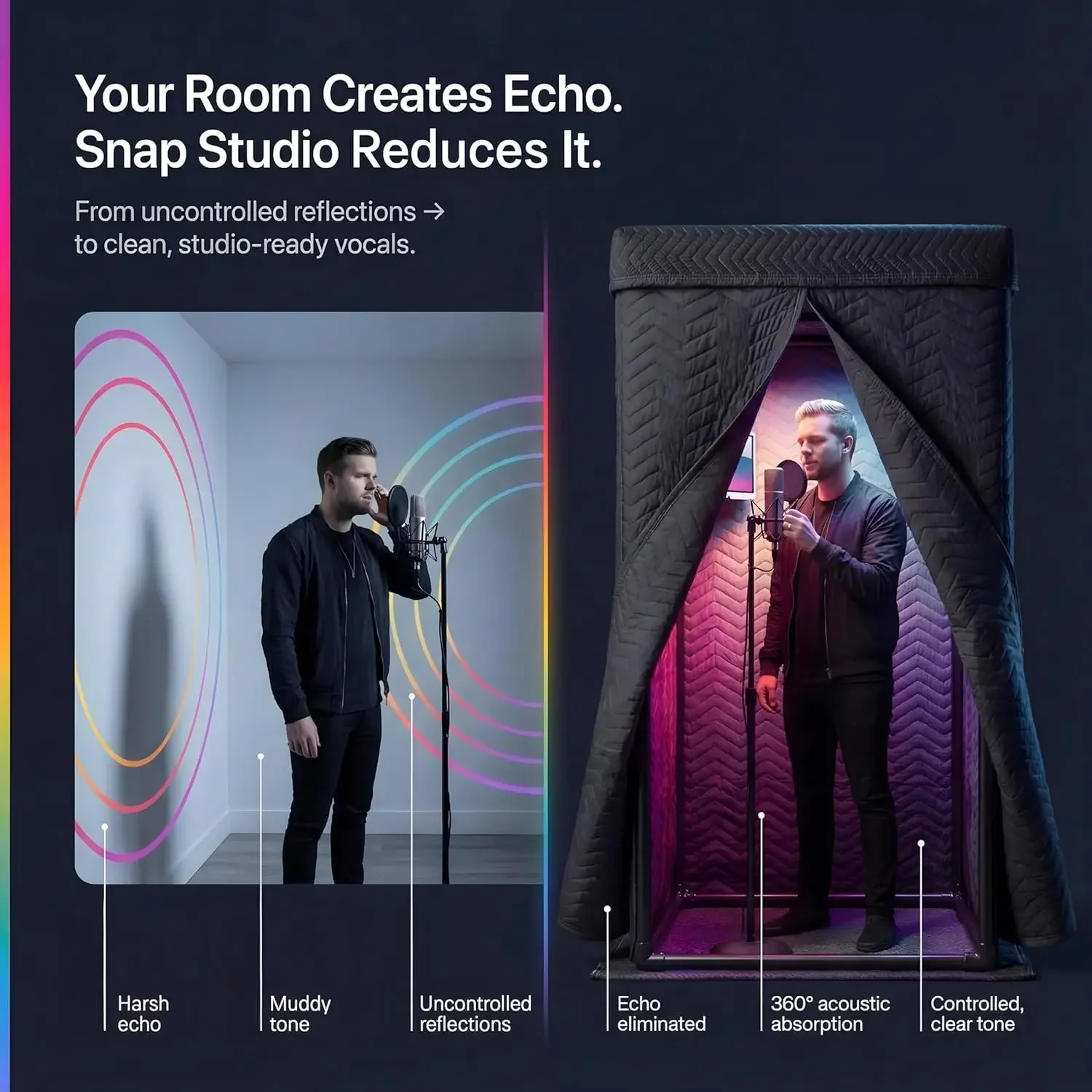
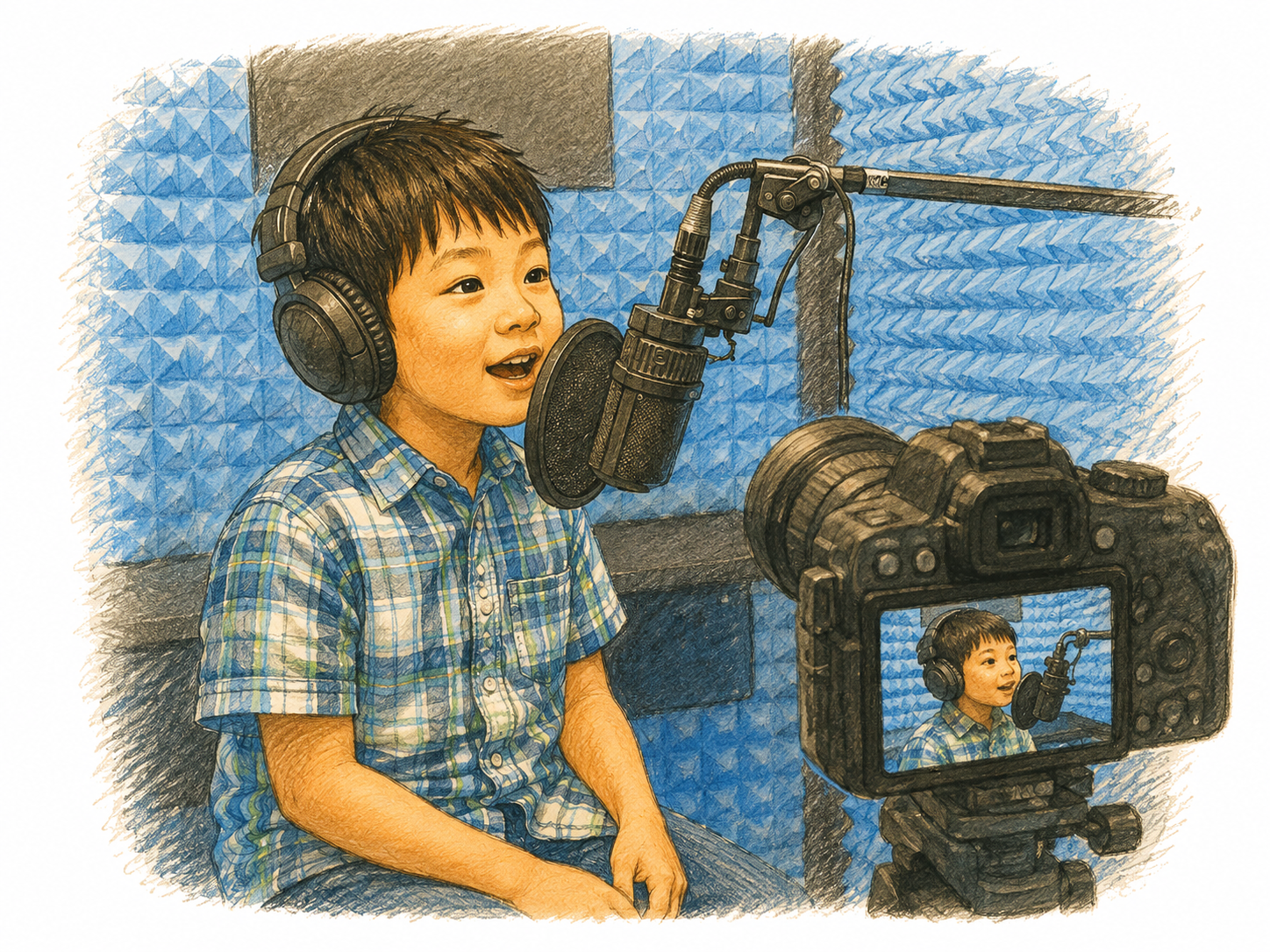
The Truth Booth is a small room a child can stand up in — 43 inches square, six foot eight at the ceiling, enclosed on three sides and open at the front. Inside there's a stool, a microphone at speaking height, warm light along both walls, and a backdrop made for this film and nothing else. The camera sits outside, five or six feet back, looking in through the open front, so the child is alone in the frame and never alone in the room.
One child at a time. One facilitator. A door that closes.
WHERE IT IS NOW
Truth Booth sessions will be in production across Los Angeles. The five fables are in development. The film is fiscally sponsored by From the Heart Productions, a 501(c)(3) nonprofit, and supported to date by the Center for Cultural Innovation and From the Heart Productions.
Julie Rico
Creator and Producer
Mews Small
Co-Creator and Producer
Bonita Versh
Founding Partner
Barbara Trent
Strategic Documentary Advisor. Academy Award winner.
Kat Messing
Animation. Slamdance Grand Jury Prize winner.
Sanjyot Varade
Animation
StopMoTreats
Animation collaborators
HOST THE BOOTH
HERO
Bring the Truth Booth to your institution.
A recording residency where your students speak for themselves — and a discussion program that keeps working after we pack up.
The Truth Booth is a quiet, enclosed recording space we set up on your campus. Students come in one or two at a time, sit with a trained facilitator, and answer open questions about housing, safety, dignity, equality, and agency — what is fair, what is not, and what they would change. Sessions run about 8–12 minutes.
There is no script and no right answer. We are not filming a lesson. We are asking children what they think, about a number of subjects. The questions will be provided to you prior to the visit.
WHAT WE NEED FROM YOU
Space
A classroom, library corner, or multipurpose room — roughly 10 by 12 feet, with a door that closes. Quiet, away from bells and the PA if possible.
Time on site
Setup [90 minutes] before the first session. Strike [45 minutes] after the last.
Instructional time
Students leave class in small groups for 8–12 minutes each. Most teachers barely notice the rotation.
Students served
Roughly 25–35 per half day, 60–70 per full day.
Staffing
We bring two to three facilitators. You provide one staff member on site for the duration.
Utilities
Two standard outlets. No other technical requirements.
WHAT IT CONNECTS TO
The booth is the visible part. The program around it is what a curriculum director is buying.
Civics
Rights, fairness, and who decides — aligned to the California History–Social Science framework.
Social-emotional
Self-awareness, social awareness, and perspective-taking, mapped to CASEL competencies.
Speaking and listening
Students articulate a position and hear peers do the same. Maps to ELA speaking and listening standards.
Study guides
Free, downloadable, in two versions — ages 5–8 and ages 9–14. Yours whether or not you book us.
✳︎WE ARE FUN TO WORK WITH!✳︎JOIN US✳︎KIDS GOT RIGHTS
IT COMES TO THEM
The booth travels — into schools, libraries, parks, and community arts centers, into the places children are already standing. Free to the children, always. Priced to the institution, on a scale.
That matters more than it sounds. Most arts programming sits in the neighborhoods that can already afford it and charges a fee on top, which means the children least likely to be asked what they think are also the least able to reach the room where anyone is asking. A program that waits to be visited is a program that has already chosen its participants. We would rather drive.
Facilitation is bilingual, Spanish and English and other languages upon consultation. The booth is large enough to facilitate special needs kids.
WHERE IT GOES
Malibu to South Central. Rural towns to immigrant neighborhoods. Ages [5–13], across greater Los Angeles and out into the state.
California's children cannot learn from one another if their voices never meet. A child in one of these places almost never hears a child from another, and the distance is not only geographic — it is economic, linguistic, and cultural, and it is maintained by adults. The booth is the thing that crosses it. It puts one child's account of her own life directly beside an account that looks nothing like it, and lets both stand without commentary.
Every child has perspective worth hearing. Very few are ever asked.
CHILD SAFETY AND CONSENT
Kids Got Rights Child Safety Guidlines PDF.
— Every adult on our team who has contact with students has cleared LiveScan / DOJ and FBI background screening. Documentation is available to your district in advance.
— No child is recorded without written parental consent obtained beforehand. We provide the forms in [English and Spanish], and we do the chasing, not your office staff.
— Written consent is not enough on its own. Every child also gives verbal assent at the booth, after being told in plain language what the recording is for.
— A child may stop at any point, skip any question, or ask us to delete their recording — before, during, or after. We tell them this first, not in fine print.
— A designated school staff member and a social worker or counselor or psychologist is present in the immediate area for every session.
— Our facilitators are mandated reporters. If a student discloses abuse, neglect, or immediate danger, we notify your designated site administrator the same day and follow [your protocol / California mandated reporting law]. We do not sit on it, and we do not handle it alone.
— Recordings are [stored and used as follows — describe]. Families receive [describe what families get and when].
— A certificate of general liability insurance is available on request. Your school or district can be named as additional insured.
WHO WE NEED
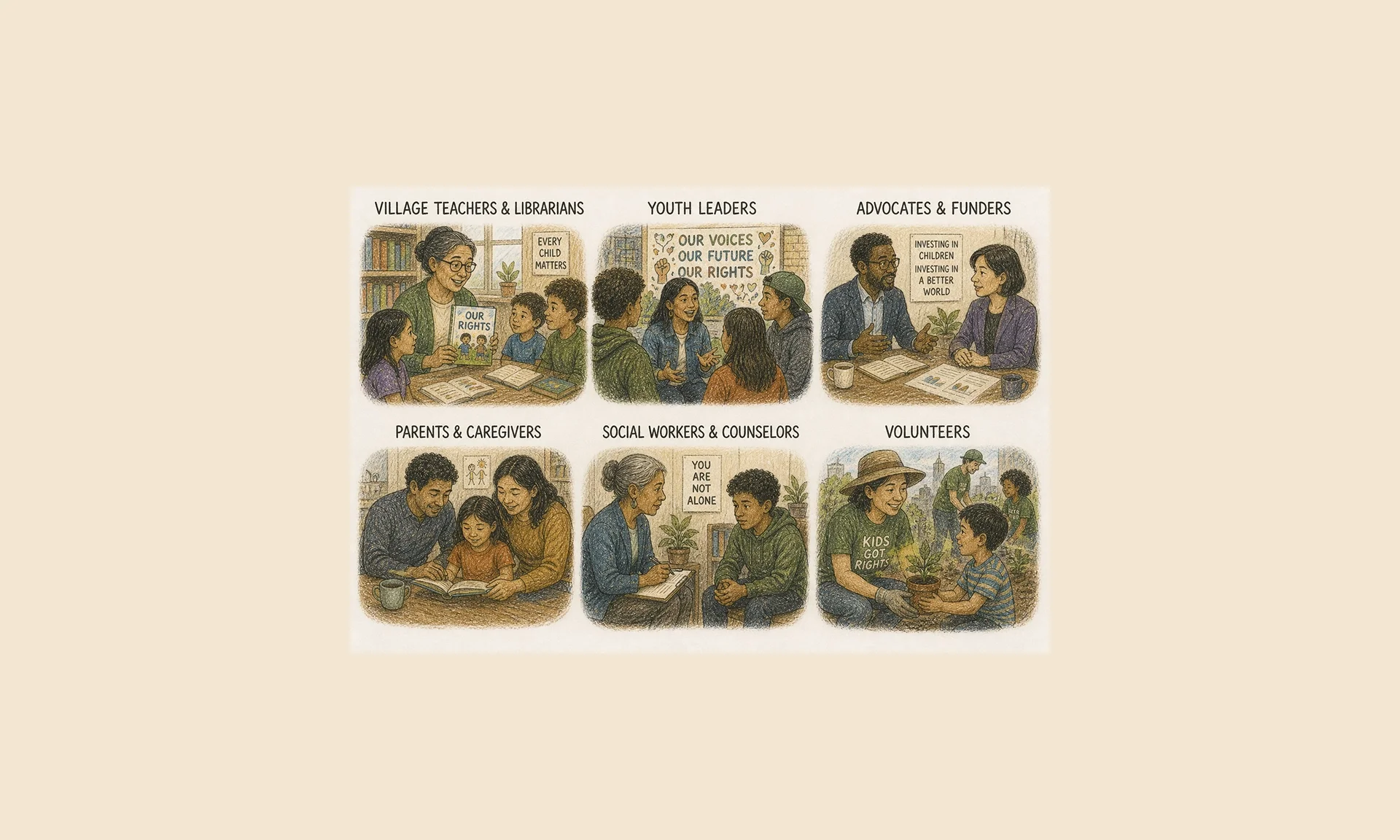
Teachers & Librarians
Bring the film into classrooms and library programs. Lead discussions using our age-appropriate study guides for ages 5–8 and 9–13. Screen segments aligned with civics, social studies, and life-skills curricula.
Youth Program Leaders
Screen for community centers, after-school programs, faith communities, and youth groups. Host facilitated screenings with discussion questions, activity kits, and follow-up workshops.
Advocates & Funders
Sponsor screenings in your network. Connect us with foundations, NGOs, and policy organizations. Champion the film inside the institutions you already serve.
Parents & Caregivers
Watch with the children in your life. Use the film to start conversations about safety, fairness, and what to do when something feels wrong. Our companion guides give caregivers concrete language.
Social Workers & Counselors
Use the film as a trauma-informed teaching tool with the children you serve. The animation lets children engage with the material at safe emotional distance.
Volunteers
Help staff Truth Booth events. Translate study guides into more languages. Distribute screening packs to schools and community centers in your area
A Documentary/Animation to Empower Kids Worldwide
Learn How to give
Support the Truth Booth Initiative
We don't teach children about their rights. We listen to their stories first.
Kids Got Rights is a documentary and educational initiative built around the Truth Booth — a traveling space where a child steps in, the door closes, and for a few minutes, they can just talk. Your gift helps bring the Truth Booth to twenty schools across Los Angeles.
Kids Got Rights is fiscally sponsored by From the Heart Productions, a 501(c)(3) nonprofit — so your gift is tax-deductible to the extent allowed by law.
Join our mailing list tell us how you would like to help.
Follow us on social
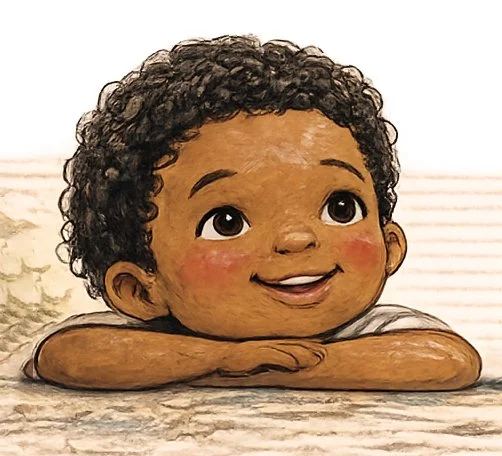
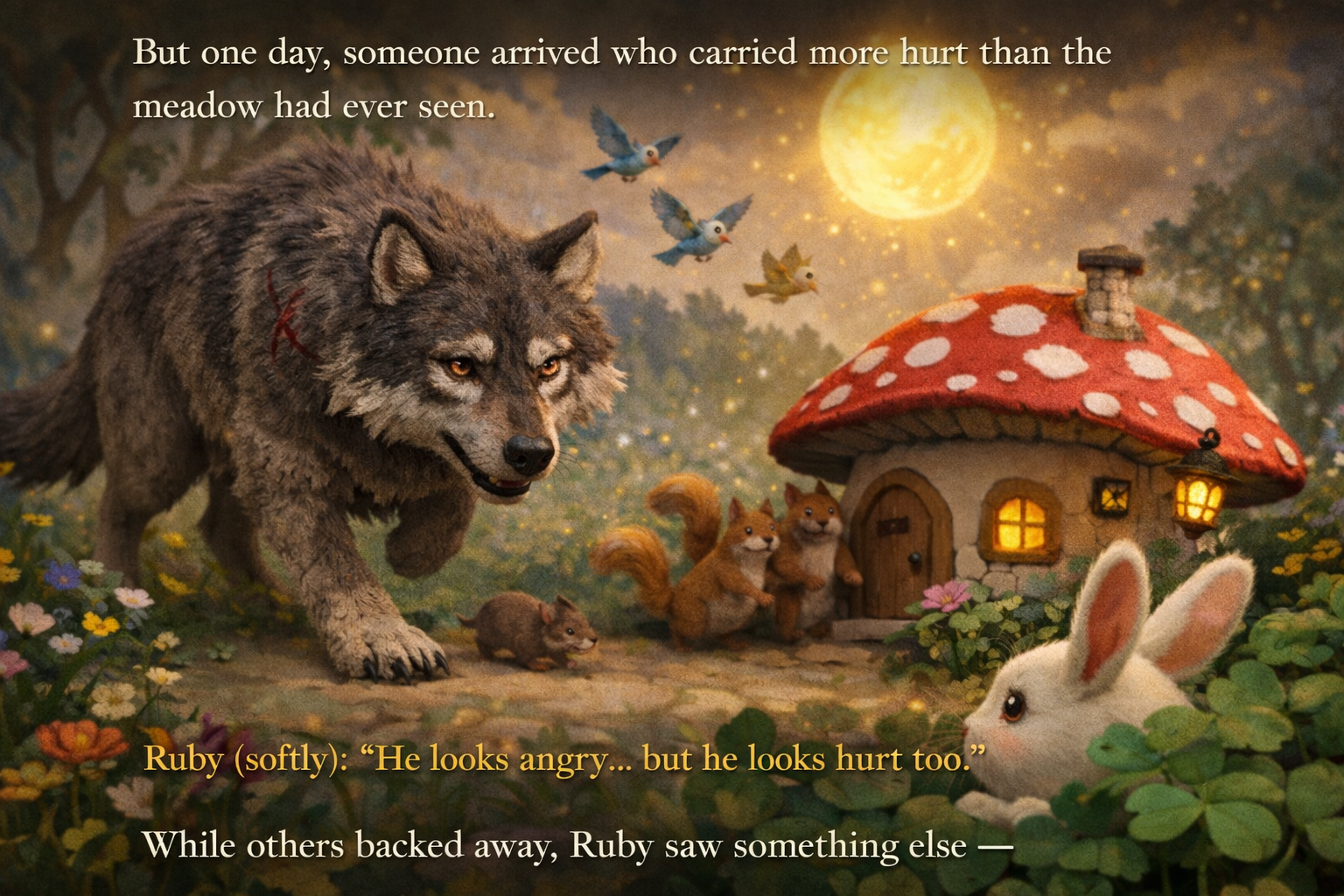
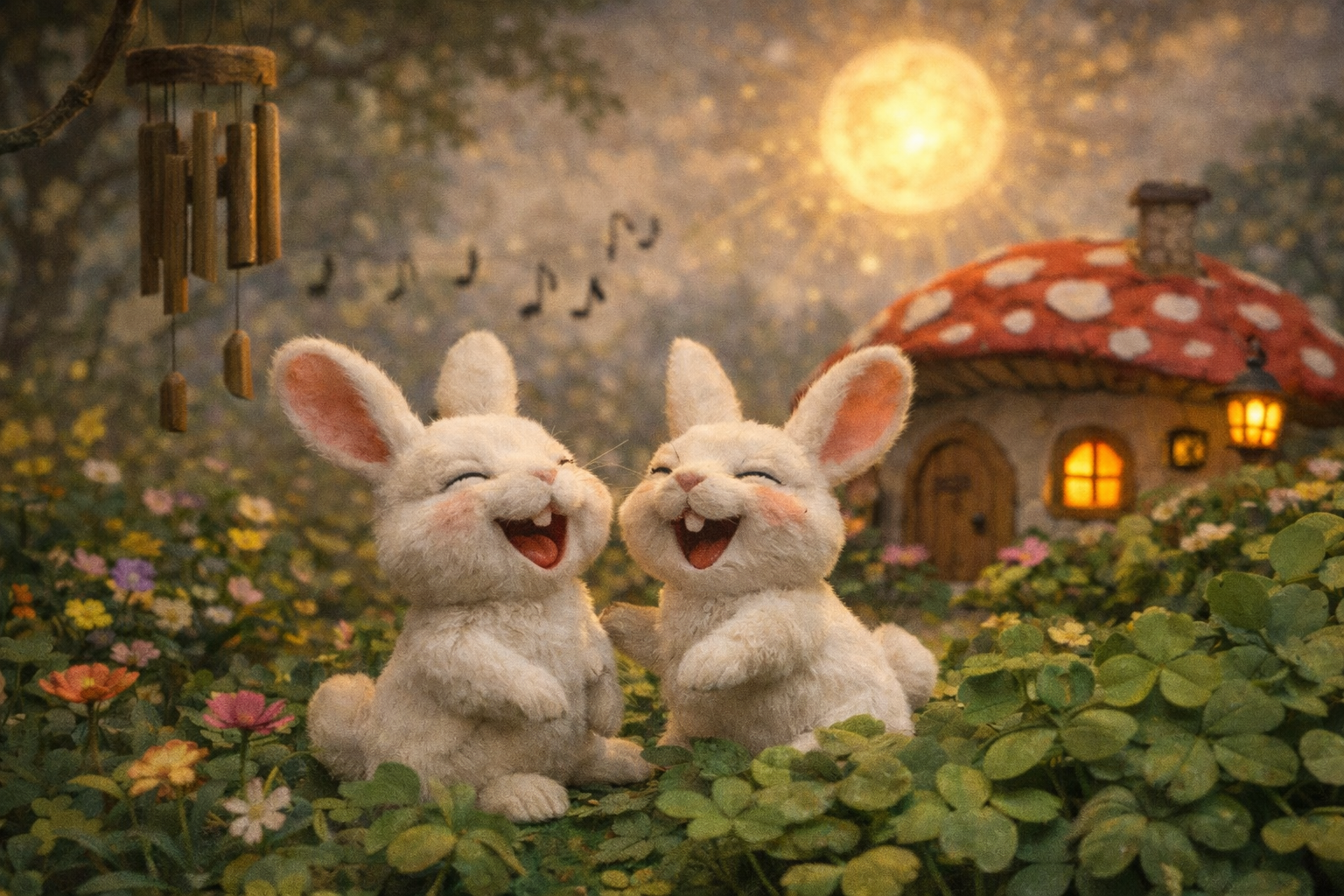
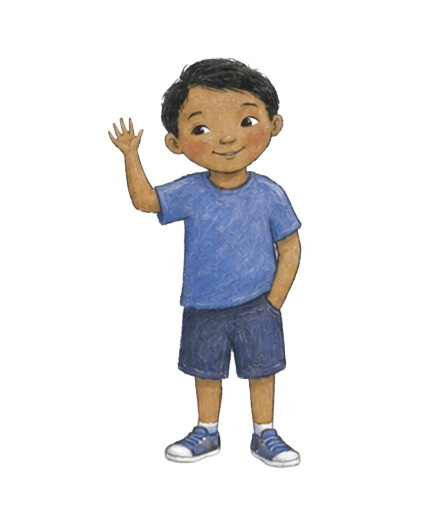
Kids Got Rights presents five animated/2-D, 3-D and stop motion animations.
The Healing Meadow(No Torture or Cruel Treatment) - We meet Ruby, Winston, and the Heart Stone breaking the cycle of hurt through collective kindness
Opening Scene: In the same magical forest…..
About the Team
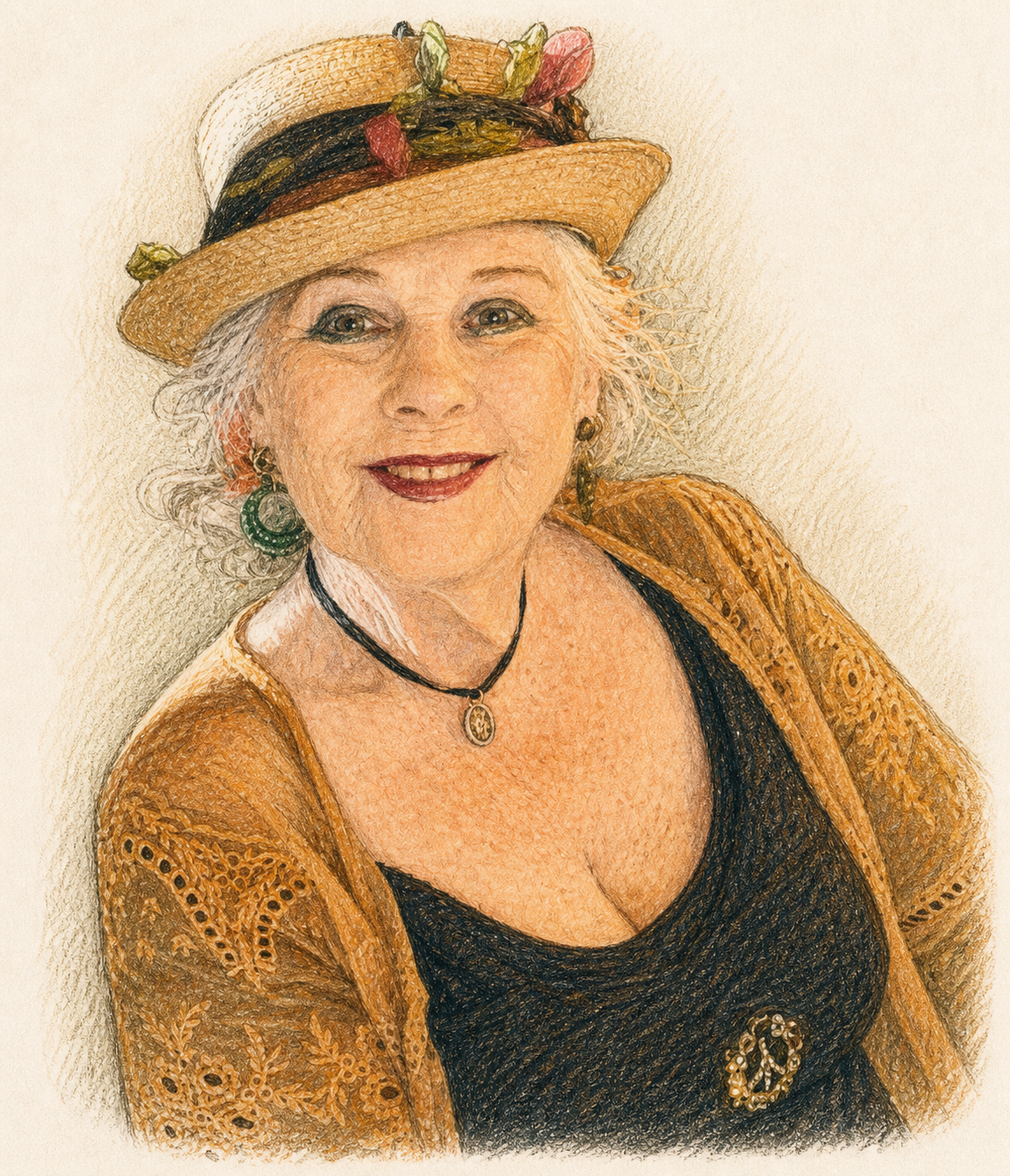

Project Team
Mews Small Producer, Small is best known for her roles as Candy in the film One Flew Over the Cuckoo's Nest (credited as Marya Small) among many roles including the film Sleeper and others See: Mews Small Website
linkedin.com/in/mews-small-b7301133
https://www.mewssmall.com/Welcome.html
Julie Rico — Creator /Producer
Julie Rico is one of the creators of Kids Got Rights, a participatory documentary initiative that amplifies children’s voices through community storytelling and film. Her work focuses on creating spaces where young people can speak about their experiences and perspectives on dignity, fairness, and belonging.
www.linkedin.com/in/juliericoLA
https://www.juliericogallery.com
Animation legend Bonita Versh,
linkedin.com/in/bonita-versh-6804aa5
Barbara Trent, Consultant, Academy Award winner for Panama Decption
Four to five talented 3-D animators and Stop Motion Artists will join us
https://www.imdb.com/name/nm0872134/
Our partner and Fiscal Sponsor
From the Heart Productions